Why Legacy MDM Is Failing Mission-Critical Industries (And What To Do About It)
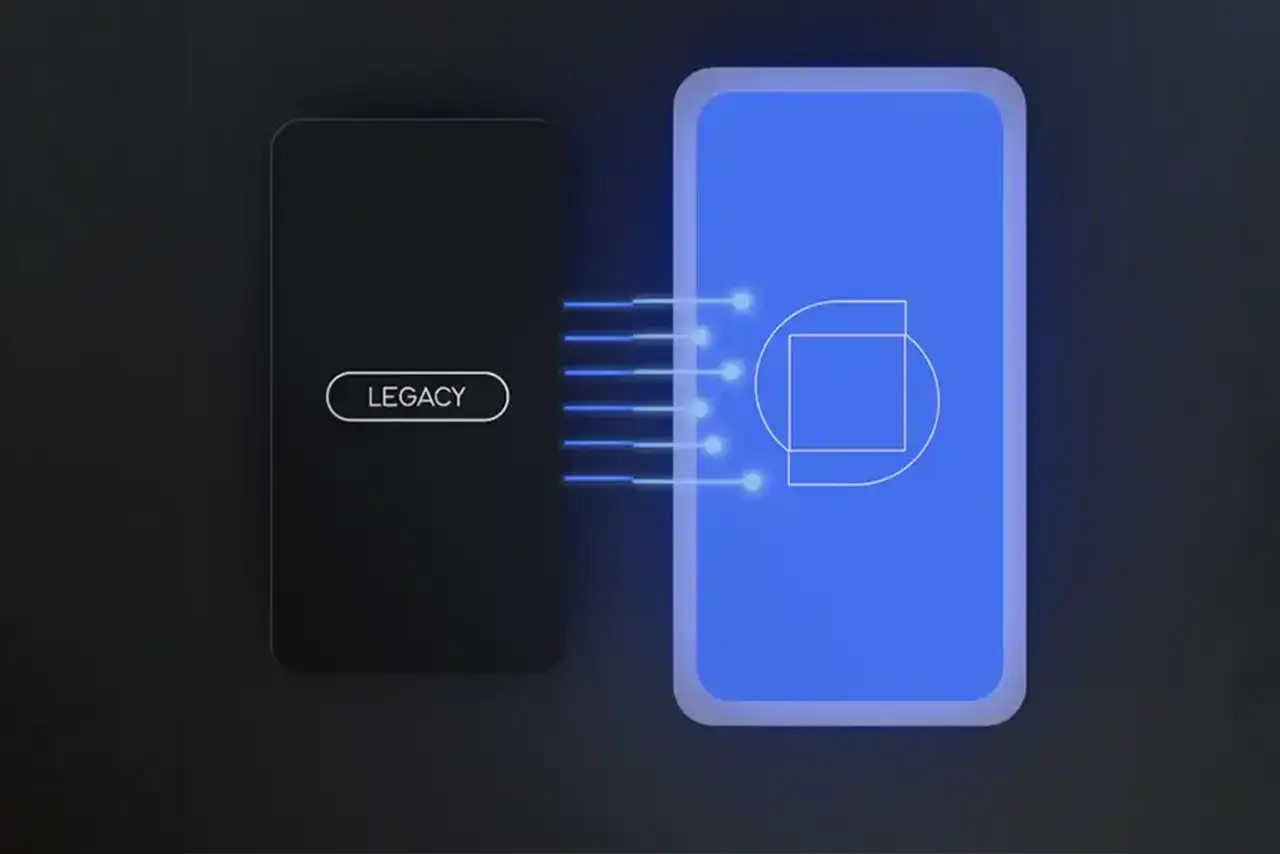
Legacy MDM tools were built for a simpler world. But today's frontline operations demand real-time control, offline resilience, and AI-driven intelligence. We'll explain why the gap is widening and how modern EdgeOps platforms are closing it.
Let's take a step back. Back to when the first mobile device management platforms were built: Blockbuster Video still had retail locations. MySpace was a social media giant. And enterprise "mobility" meant handling a few hundred BlackBerry devices for a company's sales team. That was the world MDM was designed for. Two decades on, the world looks radically different, but many of the underlying architectures do not.
It's 2026 now, and mission-critical organizations across retail, logistics, hospitality, and field service are managing thousands — sometimes millions — of edge devices that must perform flawlessly in harsh, distributed, and often offline environments. The stakes are high: when a barcode scanner freezes on a warehouse floor, or a kiosk crashes mid-shift, operations grind to a halt and revenue is lost.
The real cost of "good enough"
Legacy MDM vendors have responded to modern demands with incremental patches and clunky updates. The result? Brittle systems that create more operational risk than they solve. IT teams burn hours manually troubleshooting device issues. Firmware updates require downtime windows. Compliance drifts because policies can't be enforced reliably at scale.
| 85% | 1M+ | 22+ |
|
POSSIBLE COST REDUCTION VS. LEGACY MDM |
DEVICES MANGEABLE ON MODERN EDGEOPS |
COUNTRIES WHERE MODERN MDM IS DEPLOYED |
These numbers aren't hypothetical. Organizations that have migrated from legacy MDM platforms to modern, edge-native solutions report dramatic reductions in per-device management costs, downtime incidents, and IT overhead. The problem is that most enterprises don't know what they're missing, because their MDM vendor has never shown them an alternative.
Where legacy solutions break down by industry
The failure modes are different depending on the vertical, but the underlying cause is the same: an architecture designed for low-volume, always-connected, office-based devices struggling to survive in the real world.
| RETAIL | LOGISTICS | HOSPITALITY | FIELD SERVICE |
| POS systems and kiosks fail silently. No real-time visibility means store managers only discover problems after the fact. | Handheld scanners go offline mid-route. Updates pushed without connection awareness cause mass device failures in the field. |
Hundreds of guest-facing devices across a property need instant policy changes. Legacy MDM turns this into a days-long IT project.
|
Technicians in low-connectivity zones are unreachable. Configurations can't adapt to location or context without a live connection.
|
The Three pillars old-style MDM can't deliver
1. Real-time intelligence without a permanent connection
Modern edge devices operate in environments where connectivity is intermittent or unreliable. Legacy MDM platforms are cloud-dependent, which means when the connection drops, visibility just drops with it. A truly edge-native platform executes management logic device-side, so policies are enforced, data is captured, and alerts are triggered regardless of network state.
2. AI-driven predictive management
Traditional MDM is reactive. It tells you something broke after the fact. Modern platforms use machine learning to identify anomalies before they become failures: unusual battery drain, irregular app behavior, location patterns that suggest a device is lost or stolen. Predictive maintenance isn't a luxury feature; for mission-critical operations, it's a necessity.
3. Declarative, not prescriptive, control
Legacy MDM pushes rigid configurations and hopes they stick. Declarative Device Management (DDM) works differently: you define the desired state, and the device is responsible for achieving and maintaining it, even without continuous instructions from the server. This means faster updates, more reliable compliance, and far less configuration drift at scale.
The shift from MDM to DDM is as significant as the shift from physical servers to cloud. Organizations that make the move now will have a measurable operational advantage within months.
Calvin Chung, CEO and Co-Founder of Springdel
Now, what does a modern MDM look like?
One of the biggest misconceptions about moving off legacy MDM is that it requires a rip-and-replace operation that disrupts ongoing operations. The reality is that modern platforms are designed to migrate existing device fleets with minimal downtime and without requiring hardware replacement.
Peninsula Hotels, for example, modernized and secured its global fleet of thousands of devices using Springdel's Springmatic platform, spanning multiple operating systems including AOSP, GMS, non-GMS, and iOS. Without operational disruption.
The key is choosing a platform that is genuinely device and OS agnostic, not one that claims cross-platform support while quietly optimizing only for a single ecosystem.
The MDM industry is at a genuine inflection point. Edge AI, declarative management, and real-time device intelligence are no longer emerging trends — they are table stakes for enterprises that need their device fleets to perform like the mission-critical assets they are.
Organizations still running legacy MDM aren't just missing out on efficiency gains. They're accumulating operational debt that will become increasingly expensive to carry as the gap between what they have and what's possible continues to widen.
The question is not whether to modernize. It's how quickly you can do it before the cost of inaction outweighs the cost of change.
Ready to move beyond legacy MDM?